Key Takeaways:
- Bulgarians vote on Sunday for the eighth parliamentary election in five years, seeking an end to chronic political instability.
- Front-runner Rumen Radev, a former president and ex-air force commander, leads a left-leaning coalition with Eurosceptic and pro-Russian views.
- The election follows mass protests over corruption and a revolving door of weak governments, none lasting more than a year.
- Bulgaria joined the Schengen Area in January, making this vote crucial for its European direction.
Another Snap Vote, Another Chance for Change
Sofia is once again the center of a democratic experiment. Bulgarians head to the polls on Sunday for the eighth time in just five years, hoping that this election will finally produce a stable government. The nation of 6.5 million has been caught in a cycle of fragmented parliaments and weak coalitions, each collapsing within months due to street protests or backroom deals.
Since 2021, no government has survived more than a year. Public trust is at an all-time low, and voter turnout has been shrinking. Yet, this vote carries extra weight: it could bring a pro-Russian former president to power, just days after Hungarians rejected Viktor Orbán's authoritarian turn.
Rumen Radev: Fighter Pilot Turned Political Wildcard
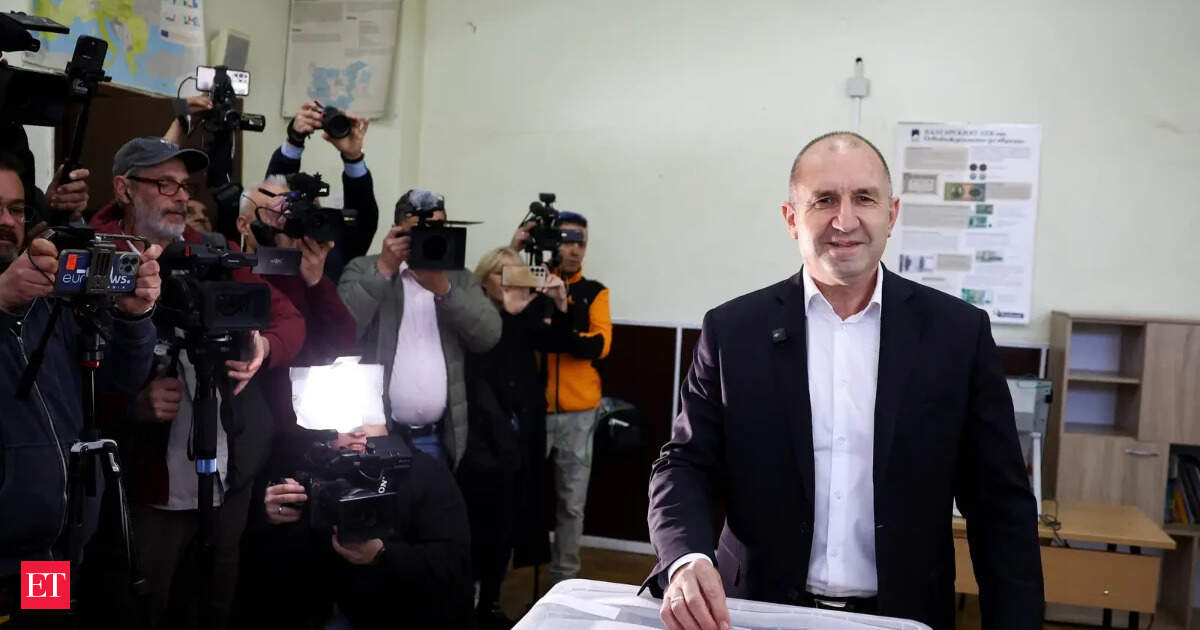
The front-runner is Rumen Radev, a 62-year-old former fighter pilot and air force commander who resigned as president in January to lead the newly formed Progressive Bulgaria coalition. He is widely seen as Bulgaria's most popular politician, but his platform is divisive.
- Anti-corruption stance: Radev has vowed to dismantle the "corrupt, oligarchic model of governance" and tackle the mafia ties that plague Bulgarian politics.
- Pro-Russian leanings: While he officially condemns Russia's invasion of Ukraine, Radev opposes military aid to Kyiv and favors reopening talks with Moscow.
- Eurosceptic undertones: His rhetoric often questions EU integration, raising concerns about Bulgaria's commitment to Schengen and the eurozone.
The Context: A Nation at a Crossroads
Bulgaria joined the Schengen Area in January 2025, a milestone that promised easier travel and stronger ties with Europe. It also joined the eurozone on January 1. But the political chaos threatens to undermine these gains.
The snap election was triggered by the resignation of a conservative-led government after nationwide protests in December that drew hundreds of thousands, mainly young people, demanding an independent judiciary and an end to corruption.
The previous three-time conservative prime minister, Boyko Borissov, resigned in 2021 after similar protests. His center-right GERB party is Radev's closest rival, polling at around 20%.
What the Polls Say
Opinion polls predict Radev's coalition could win over 30% of the vote, putting him nearly 10 points ahead of GERB. The margin of error is 3 to 3.5%. If confirmed, this would give Radev a strong mandate, but not an outright majority.
- Key challenge: Forming a coalition remains difficult. Past parliaments have been too fragmented to govern effectively.
- International implications: A Radev-led government could strain ties with NATO and the EU, especially on Ukraine policy and rule-of-law reforms.
What This Means for Schengen and Travelers
Bulgaria's full integration into the border-free Schengen Area was a major step for travelers and businesses. However, political instability could slow down necessary reforms, such as judicial independence and anti-corruption measures.
- For travelers: No immediate changes to border rules are expected, but a prolonged crisis could affect visa policies or border cooperation.
- For expats and investors: Uncertainty may deter foreign investment and complicate residency or work permits.
A Glimmer of Hope?
Despite the gloom, some analysts see a silver lining. The repeated elections reflect a vibrant civil society that refuses to accept oligarchic rule. The December protests—led by young people—show that Bulgarians are demanding accountability.
Radev's popularity might be a double-edged sword: either he delivers real change or deepens the country's drift toward illiberalism. The outcome will resonate far beyond Bulgaria's borders, especially in a Europe grappling with populism and geopolitical tensions.
Preliminary results are expected on Monday. The world will be watching.