The European Union and its member states often champion themselves as bastions of democracy, human rights, and freedom of speech. But a growing number of cases suggest a troubling trend: the use of administrative sanctions to silence dissenting voices, creating a modern-day 'tyranny of the majority' that even Alexis de Tocqueville would recognize.
Key Takeaways:
- Freedom of speech in the EU is under a shadow. Journalists and experts face asset freezes and travel bans not for crimes, but for expressing opinions that clash with official narratives.
- The 'transatlantic creed' of democracy is selectively applied. Cases like those of Francesca Albanese and Jacques Baud show that the rules change when sensitive topics like Israel or Ukraine are involved.
- Banks and institutions 'over-comply' with sanctions, extending their reach and creating a chilling effect on anyone who questions the status quo.
The Fourth Preposition: A Lost Ideal?
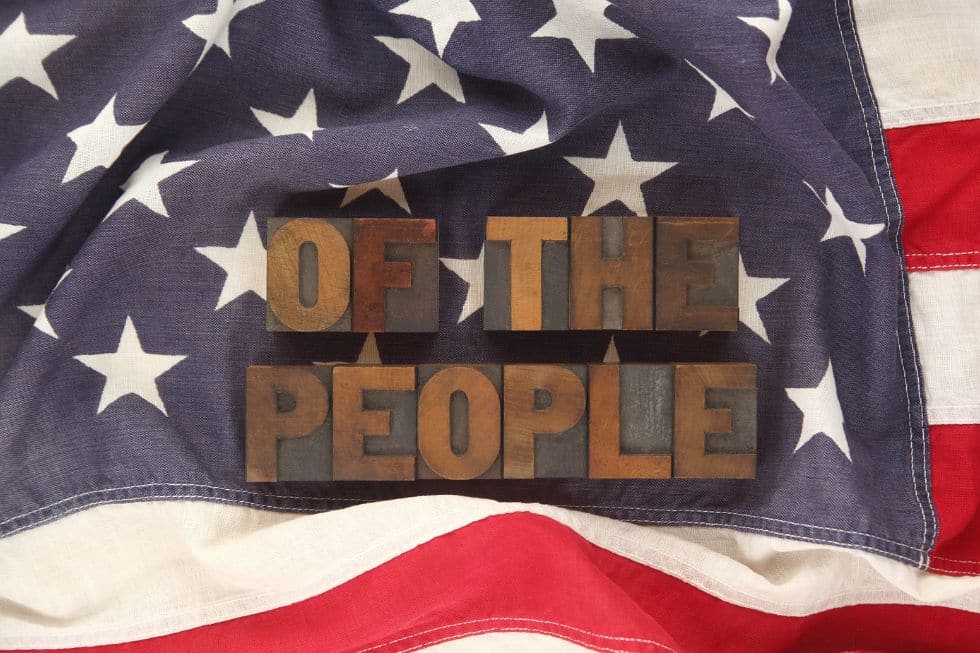
Abraham Lincoln's Gettysburg Address famously defined democracy as "government of the people, by the people, for the people." But as one sharp analysis points out, a crucial fourth preposition is missing: 'with' the people. A government that rules with the people is one in constant, creative dialogue with its citizens, not one that dictates terms from an elite perch.
Today's EU, with its complex bureaucracy and often distant decision-making in Brussels, seems to have forgotten this collaborative ideal. Instead, critics argue, it has replaced it with a rigid, unwritten creed that punishes those who step out of line.
The New Creed: Democracy, Rights, and... Conformity?
Over the past two centuries, Europe has largely adopted what might be called a 'transatlantic creed' based on four pillars: democracy, human rights, freedom of speech, and economic progress. But these noble ideas, when enforced dogmatically, can become a weapon against the very freedoms they are meant to protect.
The problem is not the ideals themselves, but their selective application. When a government sanctions a journalist for writing about the Israeli-Palestinian conflict or a former NATO officer for offering historical context on Ukraine, it reveals a gap between the creed and its practice.
Tocqueville's warning about the 'tyranny of the majority' has come full circle. In his 19th-century analysis, he noted that a majority, when feeling omnipotent, can suppress "independence of mind and true freedom of discussion." Today, this tyranny is enforced not by mobs, but by bank freezes, travel bans, and 'disinformation' allegations.
Three Cases of 'Civil Death'
Recent months have seen a spike in such actions. The tool of choice is not a criminal trial with a presumption of innocence, but an executive 'designation' or an asset freeze—a form of what one victim called 'civil death'.
1. Francesca Albanese: Sanctioned for Doing Her Job
Italian UN rapporteur Francesca Albanese was placed under severe US sanctions for using the terms "apartheid" and "genocide" in her reports on occupied Palestine. While the EU itself didn't impose these sanctions, European banks 'over-complied' , effectively ruining her ability to work and travel. Her crime? Doing the job she was hired to do.
2. Jacques Baud: Trapped by His Knowledge
Swiss citizen and former NATO intelligence officer Jacques Baud found himself in a nightmare. His bank accounts in the EU were frozen for offering a perspective on the Ukraine war that disagreed with official Western narratives.
- The consequence: He was left unable to buy food or pay for basic necessities.
- The absurdity: As a Swiss citizen working in Brussels, he is now 'trapped' inside the Schengen Area, unable to return home or use any travel services.
- The principle: He was sanctioned without a criminal conviction, leading his lawyers to argue a violation of the presumption of innocence.
3. Hüseyin Doğru: A German Journalist Silenced
German journalist Hüseyin Doğru faced a similar fate. His bank accounts and those of his wife were frozen. The German authorities claimed he was a 'disinformation agent' for reporting on the Israeli occupation and topics that could create "political discord." His only forum? A publication that prided itself on rigorous editorial standards.
A Chilling Effect on All of Us
The most alarming aspect of these cases is their breadth. Banks, fearing US or EU sanctions, are 'over-complying' and freezing accounts of anyone on any list, regardless of due process. This creates a powerful disincentive for journalists and analysts to write about controversial topics.
If a Latvian historian can be blacklisted and separated from his family for articles published in a respected online magazine, what message does that send to every other writer? It says: stick to the script, or risk your livelihood.
Conclusion: Reclaiming 'With the People'
Lincoln’s vision of a government with the people requires a robust, messy, and sometimes uncomfortable public debate. It requires tolerating views we find abhorrent, as long as they are grounded in facts. The current trend in Europe—sanctioning individuals for their opinions under the guise of fighting 'disinformation'—is a direct assault on that vision.
As Fair Observer, the publication that featured the targeted historian Valery Engel, put it: "The fact that such misreading can be used to justify persecution of an individual... leaves our editorial board speechless."
The EU must ask itself: Is it a community of values, or a fortress of conformity? The answer will determine whether its cherished creed remains a living ideal or becomes an empty, repressive dogma.