Key Takeaways:
- Progressive Bulgaria, led by former President Rumen Radev, wins 44.6% of the vote, securing around 130 seats in parliament.
- The party’s landslide victory ends years of political instability, but raises questions about Bulgaria’s EU and Russia alignment.
- Radev criticizes EU green policies and military aid to Ukraine, while Kremlin and EU leaders react differently.
A Clear Mandate for Change
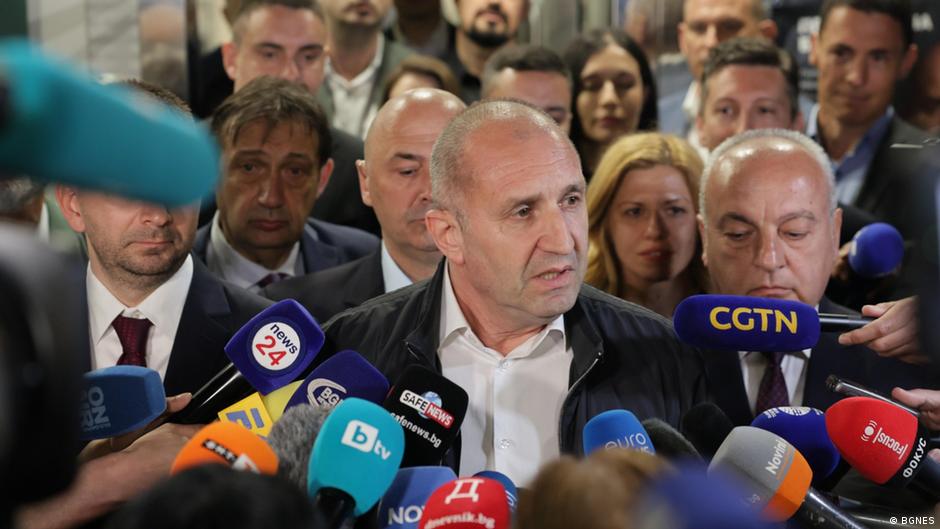
Bulgaria’s political landscape has shifted dramatically. Progressive Bulgaria, the center-left party of former President Rumen Radev, secured a commanding 44.6% of the vote in the country’s snap general election. With an estimated 130 seats in the 240-seat parliament, this is one of the largest parliamentary mandates in recent Bulgarian history.
The victory ends a cycle of repeated elections—eight in five years—that plagued the EU’s poorest member state. Radev himself emphasized the need for stability, saying, “We will do everything possible not to allow us to go to elections again. It is ruinous for Bulgaria.”
Behind the Win: A Divided Opposition
Progressive Bulgaria’s main rivals lagged far behind. The pro-European coalition We Continue the Change-Democratic Bulgaria (PP-DB) and the long-dominant GERB party of former Prime Minister Boyko Borissov both failed to mount a serious challenge. GERB, which led Bulgaria’s eurozone entry earlier this year, saw its support collapse.
Borissov struck a pragmatic tone on election night: “Winning the election is one thing; governing is quite another. GERB can go into government and into opposition.” His party has ruled out coalitions, preferring to act as a “constructive opposition” on defense and geopolitics.
Radev’s Vision: A Turn Toward Moscow?
Rumen Radev, a former air force general and Bulgaria’s president for nine years, has long been a critic of the EU. He advocates for renewing ties with Russia and opposes military aid to Ukraine, though he has officially denounced Russia’s invasion and promised not to block EU aid to Kyiv.
His stance has drawn attention from both Moscow and Brussels. Kremlin spokesman Dmitry Peskov said Russia was “impressed by the statements made by Mr. Radev.” Meanwhile, European Commission President Ursula von der Leyen congratulated him, stating, “Bulgaria is a proud member of the European family and plays an important role in tackling our common challenges.”
What This Means for Schengen and Travelers
Bulgaria joined the Schengen travel area and the eurozone in January 2025, milestones that Radev’s predecessor championed. However, Radev has opposed the EU’s green energy policy, calling it naive “in a world without rules.” While he hasn’t threatened to reverse Schengen membership, his skepticism toward EU integration could slow further cooperation.
For travelers: short-term impacts are unlikely. Bulgaria remains part of Schengen for land and air borders. But any shift in EU alignment could affect future policy harmonization on border rules, visa regimes, and travel infrastructure funding.
Coalition Prospects: Governing the Fractured Landscape
Despite the landslide, Progressive Bulgaria falls short of an absolute majority. Radev must now form a coalition or rely on parliamentary support from smaller parties. His anti-corruption platform—“drowning vote-buying in a sea of free votes”—resonates with a populace weary of oligarchic governance.
His biggest challenge: balancing domestic reform with external pressures. Radev has pledged to combat the “oligarchic governance model,” but his Russia-friendly rhetoric worries pro-European voters.
Reactions Across Europe and Beyond
The election result is a bellwether for EU-Russia relations in Southeast Europe. EU leaders will watch closely whether Radev follows through on threats to block EU sanctions on Russia. For now, his victory signals a potential pivot, but Bulgaria’s NATO membership and EU commitments remain intact.
Borissov, whose GERB party pushed for eurozone entry, sees his legacy challenged. “We fulfilled the dreams of the 1990s,” he noted, but voters opted for change.
Looking Ahead: Bulgaria’s Crossroads
Progressive Bulgaria’s win is more than a domestic shift—it’s a test for Europe’s unity. With Radev at the helm, Bulgaria may take a more independent stance on energy, defense, and migration. For SchengenTracker readers, this means monitoring how Sofia navigates its dual role as an EU member and a critic.
The next few months will reveal whether Radev can form a stable government and whether his policies align with his campaign rhetoric. One thing is clear: Bulgaria’s voters have spoken, and the message is defiance of the status quo.