Key Takeaways:
- Ryanair has formally requested that 29 European countries temporarily suspend the Entry/Exit System (EES) until September.
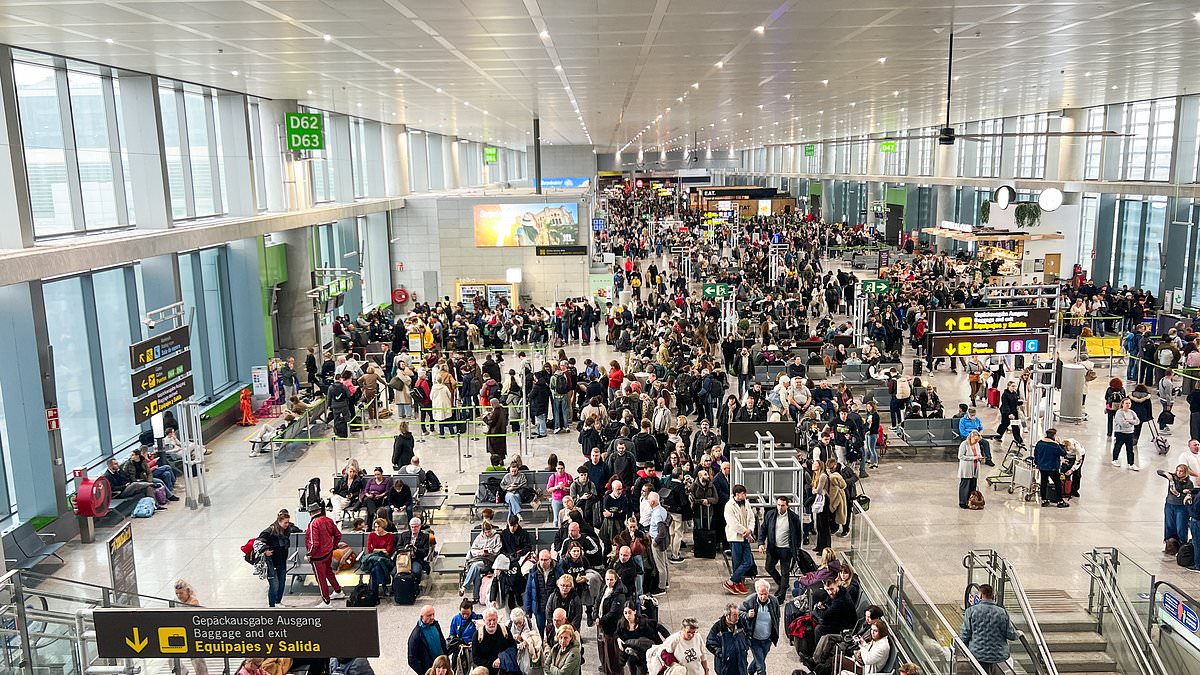
- The system, requiring biometric data from non-EU travellers, has caused major delays at airports across Spain, Italy, and France.
- Greece has already dropped fingerprinting and facial scans to ease congestion, sparking speculation that others may follow.
The EES Rollout: A Summer Nightmare for Travellers
The new Entry/Exit System (EES) was fully rolled out last month, and its impact has been immediate – and brutal. Since its introduction across Europe, travellers have battled long airport queues, staff shortages, and, in some cases, missed flights. The automated digital border system now requires non-EU nationals, including UK citizens, to register fingerprints and photographs before entering the Schengen Area, which covers most of the EU plus Iceland, Norway, Liechtenstein, and Switzerland.
For holidaymakers, this has meant hours of waiting. At airports like Málaga, Alicante, and Lanzarote, lines have stretched beyond one to two hours. In Italy, hubs including Bergamo, Malpensa, Fiumicino, and Venice have been particularly badly hit. France has also seen severe disruptions at Beauvais, Marseille, and Nantes.
Ryanair's Urgent Plea: 'Suspend the EES Until September'
Ryanair, the budget Irish carrier, has now written to the governments of all 29 countries using the EES, urging them to temporarily scrap the system until after the peak summer season. The airline’s Chief Operations Officer, Neal McMahon, called the rollout a “half-baked computer system” being implemented “in the middle of the peak travel season.”
“Governments across Europe are trying to implement a half-baked computer system in the middle of the peak travel season of the year, and passengers are paying the price,” McMahon said. He pointed out that EU legislation (Regulation (EU) 2025/1534) already provides for such a suspension, giving authorities a legal basis to act without abandoning the system entirely.
Ryanair cited Spain as a particularly problematic case: “Despite knowing for over three years that the EES would be fully operational by April 10, 2026, Spanish authorities have failed to ensure adequate staffing, system readiness, or the installation of kiosks.”
Spanish Airports Under Pressure: Families Suffer
Spain has been a hotspot for EES-related chaos. At Alicante Airport, the country’s police union recently reported that the hub is being pushed to “breaking point.” Travellers have shared harrowing experiences. One parent on Reddit described waiting in line with crying children for over three hours, with no help from airport staff.
In response, Spanish airport authority AENA has introduced new rules to speed up the process. Vulnerable passengers, families with young children, and those with disabilities are now allowed to skip the biometric machines if the queue is longer than 25 minutes and head straight to passport control. This move, however, is a band-aid on a deeper wound.
Greece Leads the Way – Will Others Follow?
While most countries struggle, Greece has already pulled the plug on mandatory fingerprinting and facial scans for non-EU travellers. The decision was widely praised as a strategic move to protect the country’s vital tourism sector, which relies heavily on British visitors. Destinations like Corfu, Crete, and Rhodes can see more than 2,000 UK arrivals per day during peak season.
Eleni Skarveli, director of the Greek National Tourism Organisation in the UK, said the move would “ensure a smoother and more efficient arrival experience” and “significantly reduce waiting times.” With no confirmed end date for the exemption, speculation is mounting that other Mediterranean countries could follow suit.
What This Means for Travellers This Summer
The summer of 2026 was already expected to be a record season for European travel, with many tourists shifting plans away from the Middle East. ABTA, the travel association, notes that Europe is seeing a big increase in interest as a holiday destination, with Greece expected to rank as the fifth most popular spot for Britons, behind Spain, France, Italy, and the US.
But the EES chaos could reshape these trends. If countries like Spain, Italy, and France do not follow Greece’s lead, travellers may face a choice: endure hours of biometric screening or book destinations that have eased the rules. Ryanair’s call may add pressure, but for now, the system remains in place – and holidaymakers are advised to arrive early, prepare for delays, and pack extra patience.
“The solution is simple,” McMahon said. “Governments should suspend the EES until September – as Greece has done – to allow passengers – many of whom are traveling with families with young children – to enjoy a smoother airport experience during their summer holidays.”